A reader of systems
Kayla Rose Bergen reads systems the way some people read a room: for what they are drawing from, and which way they are heading.
The Overflow Effect is the sharpest expression of that lens — a framework for how flourishing scales outward from a single person to a family, an organisation, a society. Her first children’s book is the same observation at a smaller altitude: a cloud that cannot hold any more rain, written for the child she used to be.
She is writing both. One is still in progress. The other is on its way to publication.
What you are giving from
The Overflow Effect is the study of the alternative: what becomes possible when a person, a family, an organisation or a society is filled past its own capacity, so that what spills over is surplus rather than sacrifice.
The conditions turn out to be the same at every scale. Depletion compounds — it passes downward, it spreads sideways, and it teaches the next generation that exhaustion is what love looks like. Overflow compounds too.
The question is not how much you can give.
Most of what we give comes out of what we have left.Kayla Rose Bergen
One pattern, wearing different clothes
Safety in a body is a regulated nervous system. In a team it is psychological safety. In a society it is the rule of law. The vocabulary changes; the condition does not.
Person
A regulated nervous system
Family
Safety that does not have to be earned
Organisation
Psychological safety
Society
The rule of law
The same idea at two altitudes
A cloud fills. It holds as long as it can. And then it lets go — and what falls is not loss. It is rain, and things grow because of it.
That is the whole idea, and it is why the same author is writing two books at the same time. One is written for a five-year-old. One is written for someone who has been running on empty for a decade. Neither is a simplification of the other.

Her first children’s book
It began as a letter she wrote to the child she was — the one who learned to hold more than she could hold. Friends heard it, read it to their own children, and kept asking her to make it a book. First of three, about the feelings children are usually left to work out alone.
RESOURCED
Written at the altitude of a life already underway. It traces the argument through one life rather than through a framework — what depletion actually costs, how it is inherited, and what changes when a person is finally filled rather than merely coping.
Abundance on the surface,
depletion underneath
Kayla Rose Bergen was born in Sydney and grew up a third culture kid across Asia. As an adult she has spent years around wealth and the institutions that hold it, in the rooms where resources are most abundant — and kept meeting the same paradox: people with everything, running on empty. Abundance on the surface, depletion underneath. The Overflow Effect began as her attempt to understand it.
She trained in psychology, then spent years testing what the training could not settle — practices, protocols, teachers and modalities, in her own body, across continents. The longest thread runs through Ayurveda: years returning to a clinic in southern India, deep enough in the tradition that its physicians became family and mentors.
What the testing taught her was rarely what any single practice promised. The same method that transforms one person can leave another worse off — and the difference is almost never the method. It is whether anyone read the system it was being handed to first.
She is not offering a protocol. Most advice fails not because it is wrong, but because it is handed to a system no one troubled to read first — the right practice, the wrong person, the wrong season. What she is after is the reading that comes before any of it.
Where she is from
Born there, and it is still the accent underneath everything.
A third culture childhood
Which is its own training in reading a system you have just arrived inside.
Wealth, and the institutions that hold it
Where the paradox was impossible to miss, and where the question started.
Ayurveda, over years
The longest thread. A clinic returned to often enough that its physicians became family and mentors.
A vessel is filled until it cannot hold any more, and then it pours.
Tea
She found the whole thesis at a tea table, long before she had a word for it.
The practice is Gong Fu Cha, learned over years from tea masters in several countries. No two of them taught it quite the same way.
What tea trains is attention to condition. Water that is too hot ruins a delicate leaf; a leaf that has been rushed gives nothing. The same leaf, read properly, will give six or seven distinct infusions — and the later ones are often the ones worth waiting for. Nothing about that is a metaphor she reached for. It is simply the thing she was already doing when the framework arrived.
It is also the answer to a question she gets often, which is how a person is supposed to begin. Not with a protocol. With something small, done attentively, often enough that you start to notice what a system is actually asking for.
When the books arrive
Be the first to know — and first in line for a signed copy.
Neither book has a publication date yet. This list is the only way to hear when one does. Occasional letters on the work in progress — what is being learned, what is being cut. Nothing else, and one click to leave.
Capital, climate, culture, community
The thesis was not built at a desk. These are the rooms it has been tested in.
- Family Office Cross-Border Investment ForumHudson Yards, New York · 2026
- Klosters ForumSwitzerland · 2026
- Transformative Wealth NYCFamily Office Forum · 2025
- Family Offices for Sustainable Development2025
- Top Tier Impact AwardsDavos · 2022
- UNGA & Climate WeekNew York · 2025
- PeaceBoat USA2025
- BioneersCalifornia · 2023
- COP27Sharm el-Sheikh · 2022
- World Economic ForumDavos · 2022
- Art BaselBasel · 2026
- Zurich Art Weekend2026
- Swiss Indian Art Collective2026
- Art Basel Miami Beach2025
- The Armory ShowNew York · 2025
- Human Tech WeekSan Francisco · 2025
- Frequency at BeyulColorado · 2025
- Summit at SeaVirgin Voyages · 2024
- Protopian ConvergenceCosta Rica · 2023
- Envision FestivalCosta Rica · 2023
For programmes and introductions
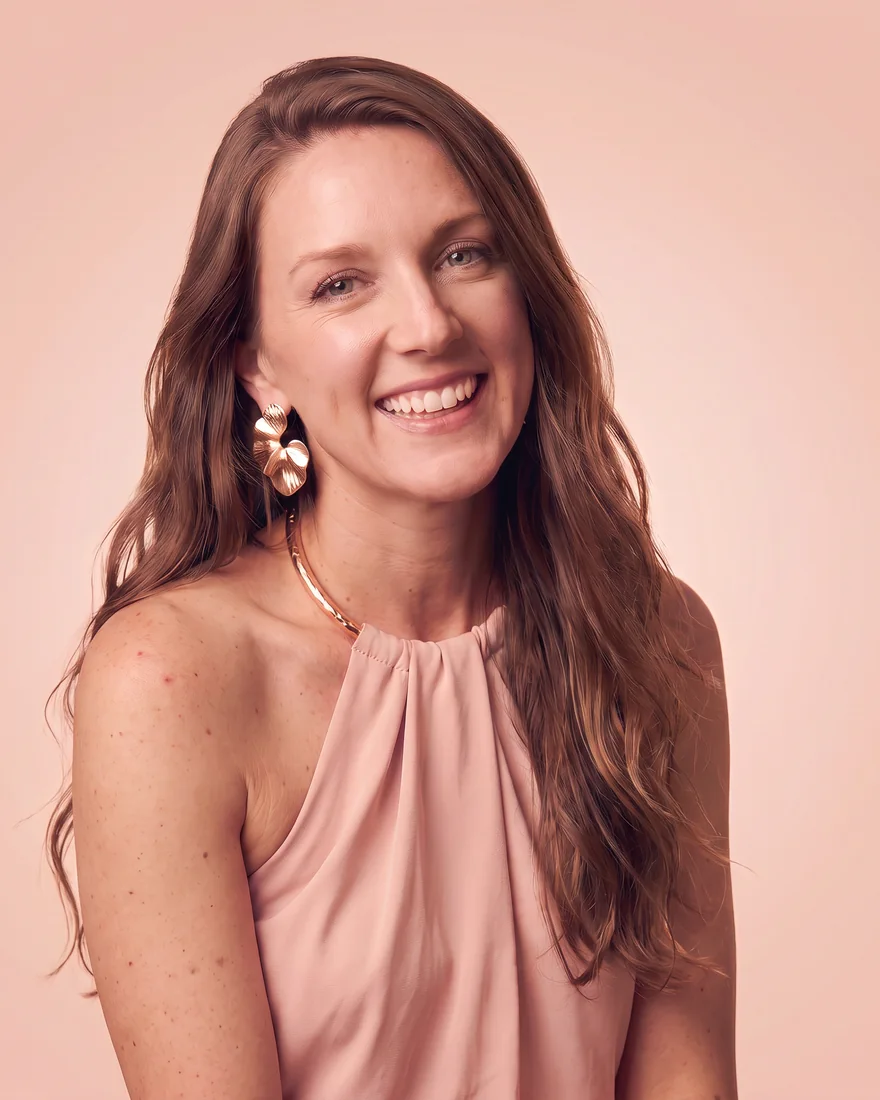
Kayla Rose Bergen is a writer and the originator of The Overflow Effect, a body of work on the conditions for flourishing and how they scale — from a single person to a family, an organisation, a society. Born in Sydney and raised across Asia, she trained in psychology and has spent years studying practices for health and human capacity across continents — most deeply in Ayurvedic medicine in India — testing them in her own life before writing about any of them. She and Vaughn Bergen were married in Hyderabad in 2022 and in New York in 2024.
Her first children’s book is on its way to publication. She is at work on RESOURCED, on the conditions that let a person be full rather than merely coping.
Or write directly — kaylarose@thebergens.co